When Teachers Were Giants
Fifty years on, I sat across a café table from three of my old teachers and felt small again. What has changed between then and now is not the teachers. It is the trust we used to give them.
years between the last classroom and the café table where it all came flooding back.
hours of laughter and memory in which half a century quietly melted away.
roles a teacher is now expected to play at once, from counsellor to documenter to parent.
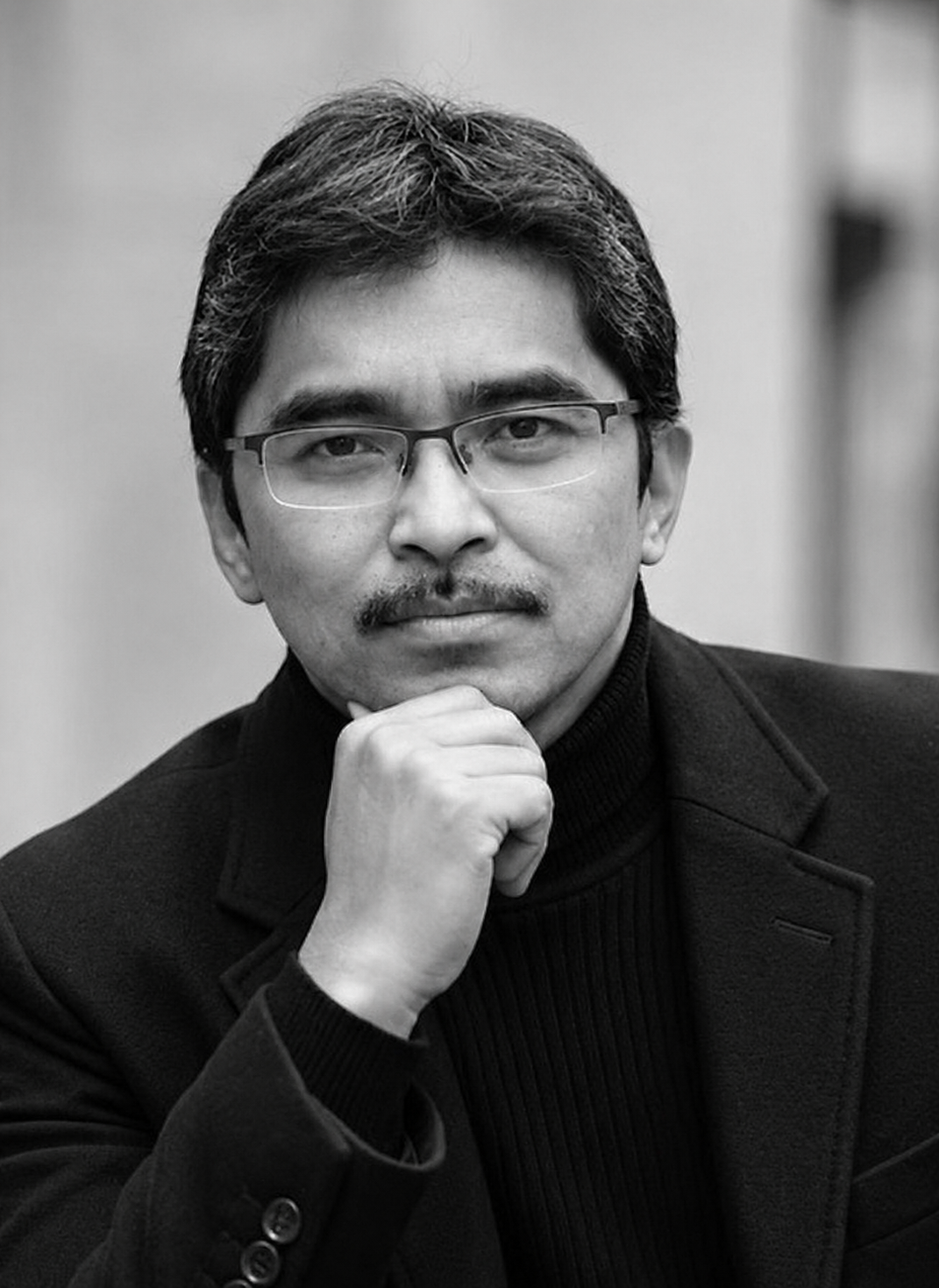
Every Teachers' Day produces a flood of nice things. Cards, cakes, a hashtag or two. Most of it is sincere and almost none of it lasts past the weekend. This piece is different, and that is exactly why I wanted to open the issue with it.
Rozilini does something brave here. She starts with a tender afternoon in Taiping and then refuses to let it stay sentimental. She uses it to ask a harder question. What happened to the trust that once let teachers teach, correct, and shape a child without checking over their shoulder first?
Read it slowly. It is not an argument for the old days, which were far from perfect. It is a quiet warning about what we lose when good teachers become, in her words, safe but silent.
“When I was small, and Christmas trees were tall.” When we were young, our teachers were giants. Yesterday, we sat with them almost as contemporaries.On memory, distance, and the people who shaped us
A Café, Three Teachers, and Fifty Vanishing Years
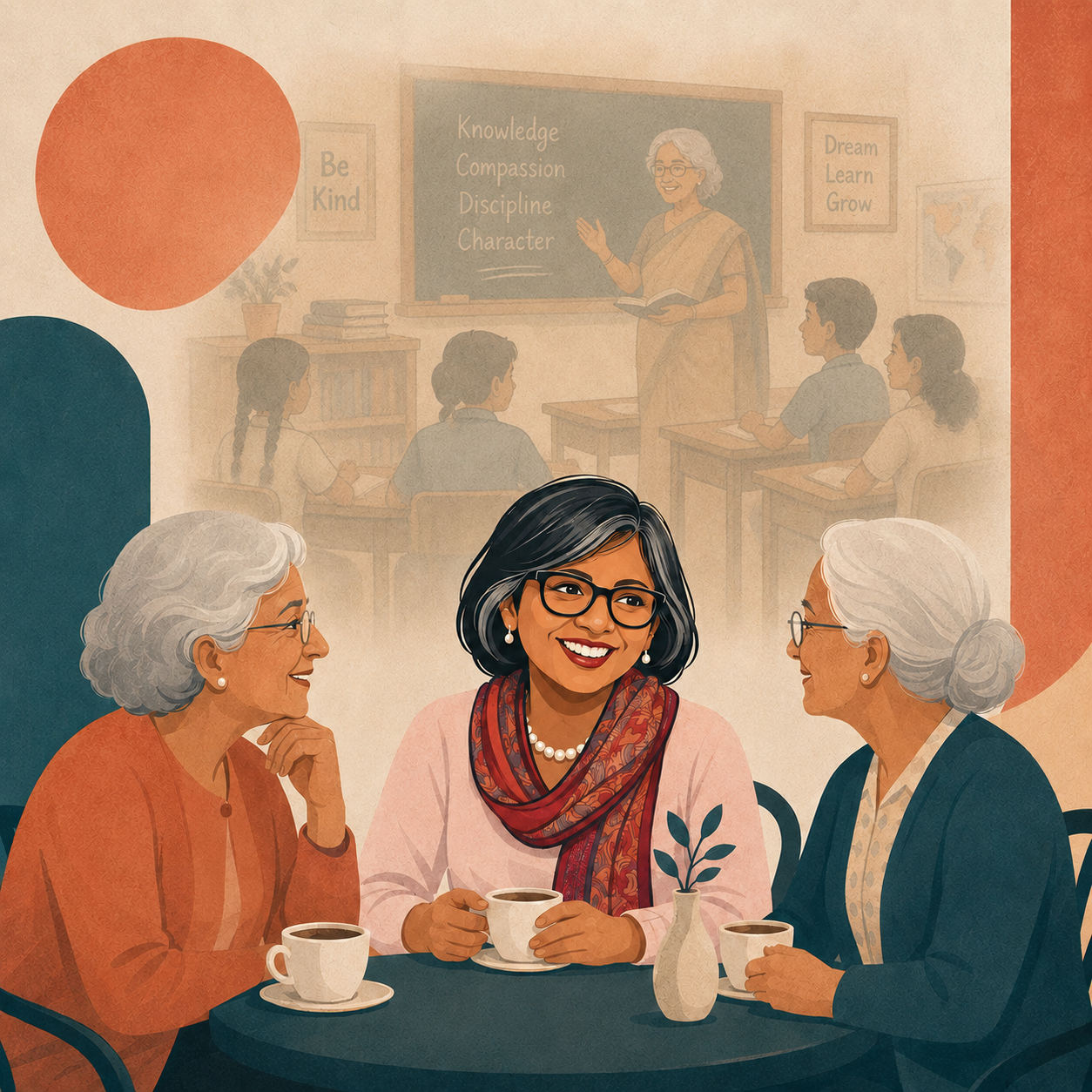
Yesterday, a few of us made a simple but deeply meaningful journey to Taiping to visit our old primary school teachers. Three of them met us, and we gathered at a café in a shopping mall for what became two and a half precious hours of conversation, laughter, and memory. For a while, fifty years quietly melted away.
These teachers helped shape the people we became. After about fifty years, they could not really remember us individually, and naturally so. But that did not matter at all. We remembered them, and perhaps that is the truest measure of a teacher's impact. You may not remember every child. They will remember you for the rest of their lives.
As we joked and laughed, I found myself looking at people who once seemed so tall, so knowledgeable, so authoritative, almost larger than life. On the train home, my thoughts drifted to the Bee Gees song First of May and the line, “When I was small, and Christmas trees were tall.” Somehow it captured the afternoon perfectly. When we were young, our teachers were giants. Yesterday, we sat with them almost as contemporaries. They are now in their late seventies or eighties, and we are in our sixties, many of us grandparents ourselves. And still, the respect and affection remained unchanged.
We also spoke about teachers who had passed on, and others now frail or unwell. There was tenderness in those conversations, and an awareness that time moves quickly. We told ourselves we should not wait another fifty years before meeting again.
What a Teacher Plants Without Ever Knowing
Joining us were two of our husbands, “honorary students,” as mine put it. They were included so naturally in the conversation that it felt as if they too had once sat in those classrooms. Perhaps this is one of the greatest gifts teachers possess. The ability to gently gather people under their wing and make them feel seen, accepted, and included.
On reflection, teachers may never fully realise the impression they leave behind. A kind word. A patient explanation. Encouragement given to a frightened child. Discipline administered with love. These remain quietly etched in hearts for decades, long after the lesson itself is forgotten.
But this visit also made me think about something harder. About how teachers and educators are perceived today compared with the so-called good old days. If teachers once stood so tall in our memory, how do we treat them now? That is the part of this story I keep turning over.
Teaching runs on a strange one-way mirror. The teacher shapes hundreds and remembers few. The pupil is shaped once and remembers forever. Most of a teacher's real impact happens out of their own sight.
From Reverence to Suspicion
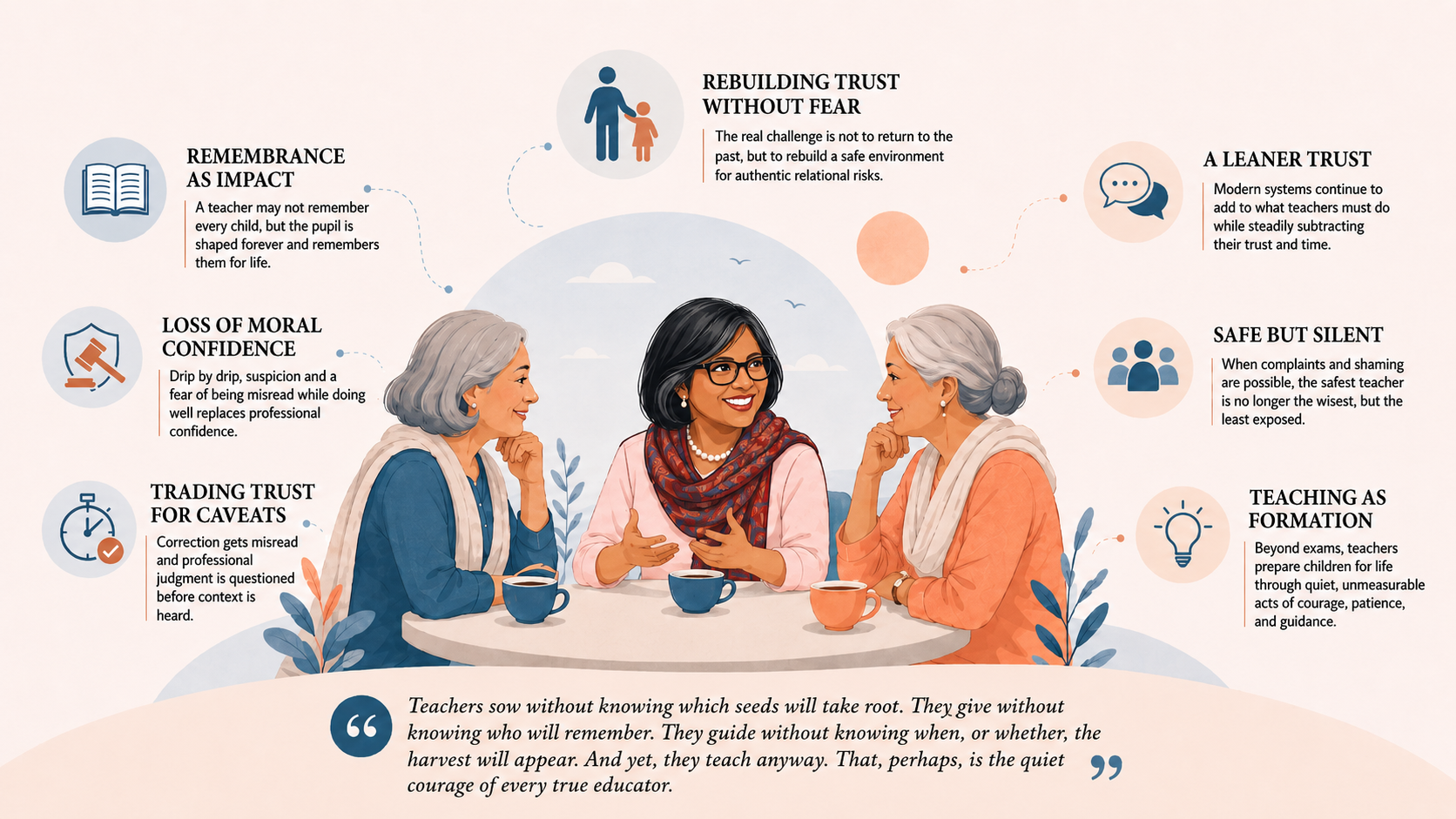
The teacher's job did not get easier. It got bigger, while the trust around it got thinner. Here is roughly how the ground moved.
Teachers were community figures, moral guides, encouragers, and trusted adults. Parents did not always agree with them, but they generally trusted their intentions. Teachers were allowed to teach, correct, guide, and shape a child beyond the four walls of a classroom.
Teachers are asked to educate, counsel, document, report, differentiate, innovate, communicate, protect, inspire, and sometimes parent. They are told to form the whole child while being handed less trust, less time, and far less emotional room to do any of it.
This Is Not Nostalgia, and the Past Was Not Golden
Let me be careful here, because this is where these conversations usually go wrong. I am not saying the old days were better. They were not. There were teachers back then who were harsh, unfair, sometimes genuinely damaging. Authority was occasionally accepted far too easily, even when it badly needed questioning. And there are many parents today who deeply respect and support their children's teachers.
So this is not a plea to wind the clock back. It is an attempt to name something that has genuinely shifted. The pendulum swung away from blind reverence, which was right and overdue. The trouble is that in many places it may have swung clean past trust and landed somewhere closer to suspicion.
Correction now gets misread. Firm guidance gets challenged. A teacher's professional judgement is questioned before anyone has heard the full context of what actually happened in the room. The instinct to give a teacher the benefit of the doubt has quietly eroded, and most teachers feel it.
“Not afraid of teaching. Afraid of being misunderstood while teaching.”
Ask teachers what keeps them up at night and you will hear a fear that did not really exist a generation ago. It is not fear of the work itself. It is the fear of being misread while doing it well.
A screenshot lifted out of context. A complaint that escalates from zero to formal in an afternoon. A WhatsApp message, a social media post, the looming possibility of administrative action. Drip by drip, this environment teaches caution to replace confidence.
When complaints, public shaming, and legal threats hang in the air, the safest teacher is no longer the wisest or most courageous one. It is the least exposed one.
Teaching Is Like Farming, With One Cruel Difference
Good teachers do not merely prepare children for examinations. They prepare them for life. They help a timid child speak. They help a struggling child try again. They help a restless child find direction, and a wounded child feel seen. These are not small things. They are quiet acts of formation, and they almost never show up on a results sheet.
In some ways, teaching is like farming, but with one crucial difference. A farmer usually knows what seed is being planted and what crop to expect. Teachers do not always have that certainty. We sow words, discipline, encouragement, patience, correction, and hope into children whose futures we cannot yet see.
Some seeds may fall by the wayside. Some may struggle among the thorns. But some will fall on good soil and yield far more than we could ever imagine, often years after we have lost track of the child entirely. We need to allow our teachers to teach with confidence, care, and love.
I remember another song that says, “Do it anyway.” Even when you are afraid. Even when the outcome is uncertain. Even when no one sees the labour. Teachers guide without knowing when, or whether, the harvest will appear. And yet they teach anyway. That, perhaps, is the quiet courage of every true educator. Happy Teachers' Day.
Five Questions Worth Sitting With
Read them slowly. They are aimed at anyone who teaches, leads a school, or writes the rules teachers live by.

Dr Rozilini Mary Fernandez-Chung is an Associate Professor at the School of Education, University of Nottingham Malaysia. Her expertise spans higher education leadership, quality assurance, transnational education, curriculum and policy development, with extensive experience working with universities, governments, and international organisations across Asia and beyond.
A Principal Fellow of Advance HE, Dr Roz is deeply passionate about educator formation, academic leadership, and purpose-driven education. Alongside her scholarly work, she writes reflective essays on education, faith, leadership, and everyday life.
What did this piece stir up for you? Share a reflection, a disagreement, a classroom story, or a question worth sitting with.